.png)
What Makes a General Session Feel Like a Show, Not Just a Meeting?
They check their phones. They wait for the next break. Important presentations begin to blend together.
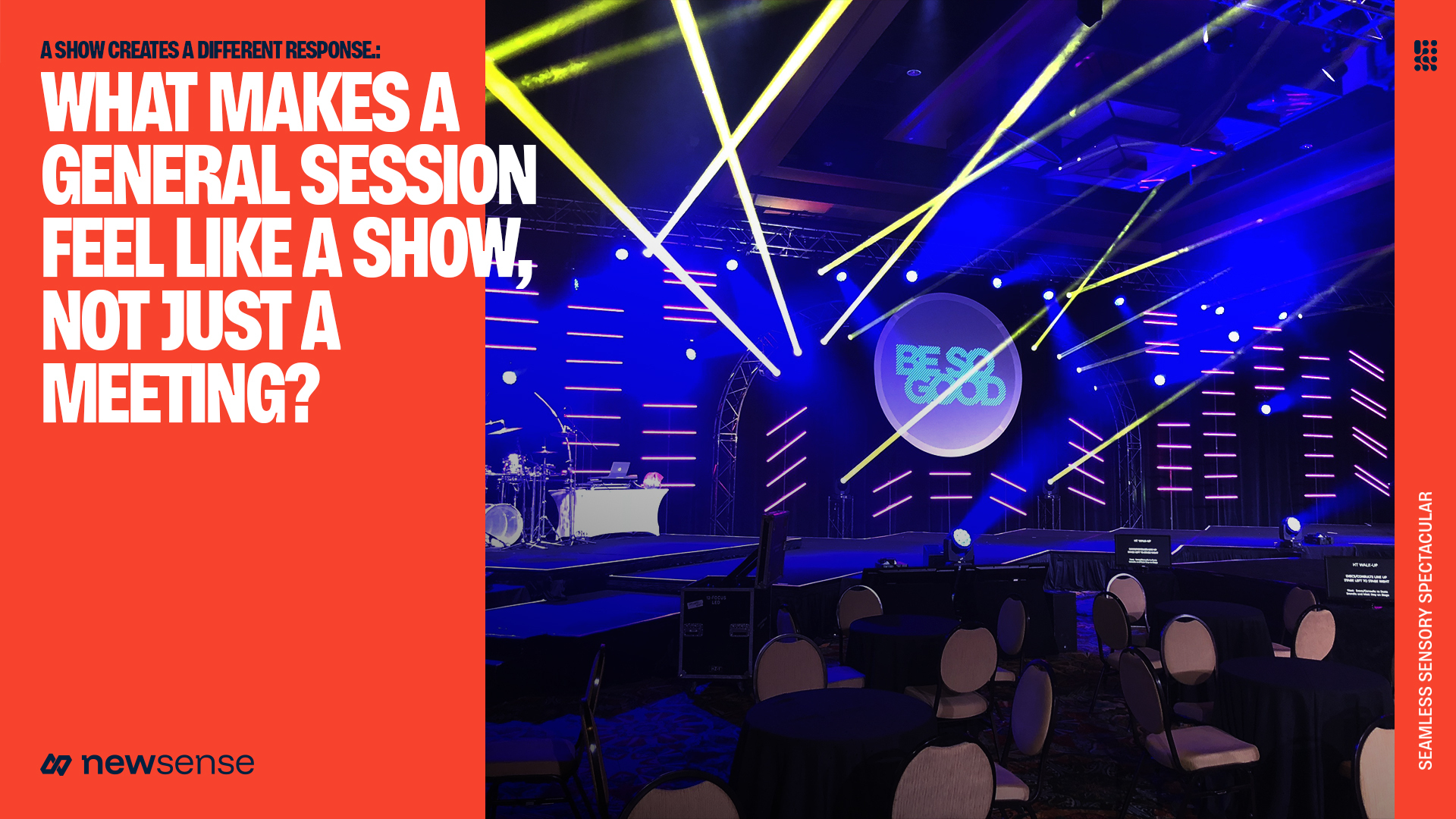
A show creates a different response. It gives people a reason to look up, follow the story, and stay connected to what happens next.
That does not mean turning every corporate gathering into a concert. It means designing the general session with rhythm, intention, and an understanding of how a live audience experiences information.
Start With an Audience Journey, Not Just an Agenda
An agenda organizes speakers and topics. A show considers how the audience should feel throughout the session.
Where should the energy rise? When does the room need a reset? Which announcement deserves more weight? What should people remember when they leave?
A sales kickoff may need to build momentum. A leadership meeting may need to create confidence. A product announcement may require anticipation and a clear reveal.
Once that journey is defined, production decisions can support it intentionally through corporate event production strategies that prioritize engagement.
Give the Opening a Purpose
The beginning tells the audience whether they are about to watch another presentation or experience something worth their attention.
An opening may combine branded content, music, lighting, creative entertainment or a carefully timed executive entrance. The exact elements depend on the company and the objective.
What matters is that the opening establishes the tone, introduces the central idea and gives the session somewhere to go.
Design the Stage as Part of the Message
The stage is the visual center of the general session. It affects how the audience perceives the speakers, the content and the company itself.
Screens should be positioned around actual sightlines. Lighting should guide attention and support executive presence. Scenic and branded elements should reinforce the event identity without competing with the message.
A larger screen alone does not create a stronger experience. Every visual element needs a clear role, as detailed in our guide on how great events are built long before guests arrive.
Produce the Transitions
General sessions often lose the audience between presentations.
A speaker finishes. The next deck is not ready. Someone crosses the stage looking for a microphone. The room waits.
These moments may seem small, but they change the pace and perceived quality of the entire session.
Music, content, lighting and precise cues can turn transitions into part of the experience. A strong run of show connects speaker entrances, presentation changes, video playback, stage resets and entertainment so momentum does not disappear between major moments. Learn more about seamlessly connecting daytime programming to nighttime events in our article on conference event production and the evening experience.
Prepare Speakers for the Experience
Even experienced executives benefit from knowing how the session will work around them.
Rehearsals allow speakers to practice entrances, understand screen placement, test microphones, review content and become comfortable with the timing of the show.
The goal is not to make corporate leaders feel scripted. It is to remove uncertainty so they can focus on communicating with confidence.
Use Technology to Support the Story
Audio, video, LED, lighting and visual content are essential, but technology should never become the entire idea.
Clear audio and video services protect the message and keep large audiences connected to the speaker. Motion graphics can make complex information easier to follow. Intelligent lighting and visuals can shift the mood between a strategic keynote, recognition moment and product reveal.
The technology works best when the audience experiences one cohesive environment—not a collection of separate production elements.
Create a Moment People Can Remember
Not every minute needs to be spectacular. Contrast is what gives the most important moments their impact.
A memorable opener, unexpected performance, audience interaction, recognition sequence or closing reveal can give the session an emotional high point.
The right moment should feel connected to the brand and purpose of the event. When entertainment or immersive content is added without that connection, it can feel like an interruption. When it supports the story, it becomes part of what the audience remembers. Explore real-world examples across our case studies library.
Bring Every Production Discipline Together
General session production includes interconnected decisions.
Audio affects speaker confidence. Stage design affects sightlines. Lighting affects cameras and photography. Content affects timing. Transitions affect attention.
When these responsibilities are separated, the corporate event team often becomes responsible for connecting them.
An integrated production partner brings AV, staging, lighting, entertainment, visual content, rehearsals and show direction into one coordinated plan. That creates clearer accountability and allows the internal team to focus on the event’s business objectives through fully produced shows.
A general session feels like a show when every element appears to belong to the same experience—and every decision helps the message land.
Planning a corporate conference, sales kickoff, leadership meeting or company-wide event?
Talk to a New Sense show producer today.
Frequently Asked Questions
What is general session production?
General session production coordinates the creative, technical and live-show elements of a company’s main conference session, including AV, staging, lighting, content, rehearsals and show calling.
How can a general session keep an audience engaged?
Strong openings, purposeful pacing, produced transitions, visual variety, audience interaction and clear storytelling help maintain attention throughout the session.
When should general session production planning begin?
A production partner may coordinate audio, screens, lighting, staging, content playback, executive cues, speaker transitions, entertainment, rehearsals, and the complete run of show.
How early should general session planning begin?
Planning should begin as early as possible, especially when the program includes senior executives, custom content, entertainment, complex staging or major announcements.

